







Etnografie del contemporaneo. Anno 6, vol. 6/2023
0,00€ – 29,00€
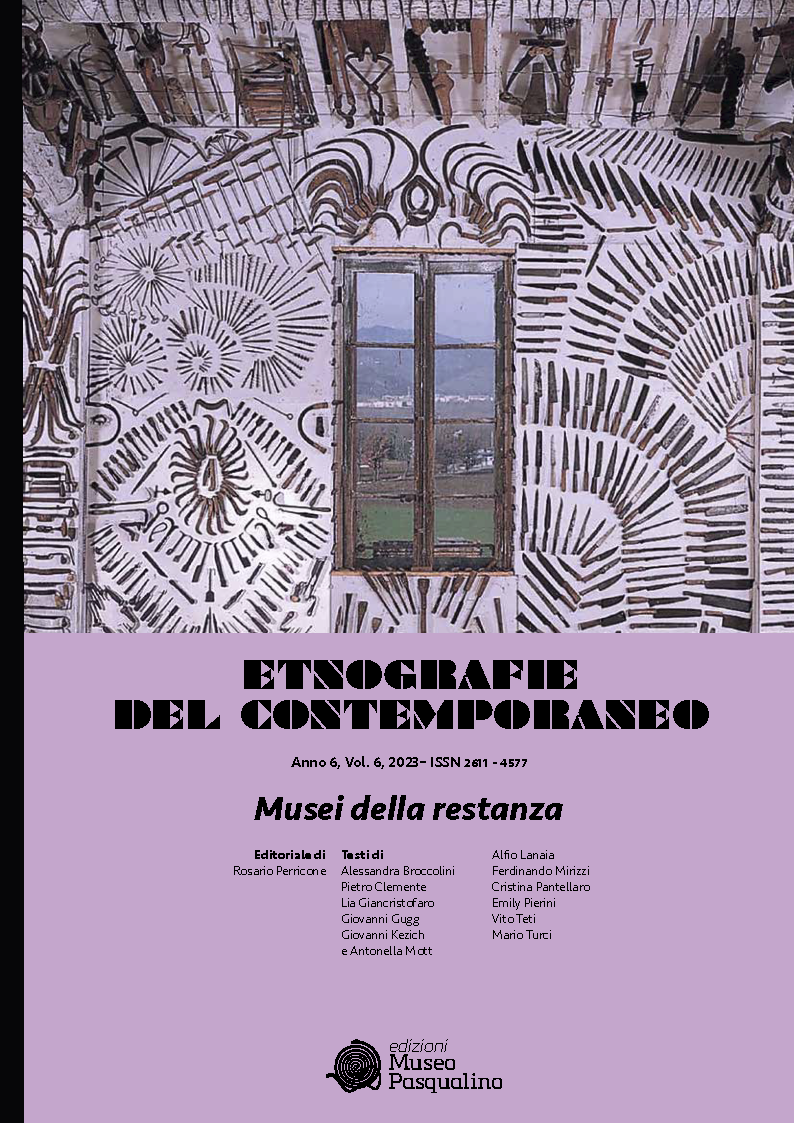
Etnografie del contemporaneo
ANNO 6, VOLUME 6
Edizioni Museo Pasqualino, Palermo 2023
ISSN 2611 – 4577
__________
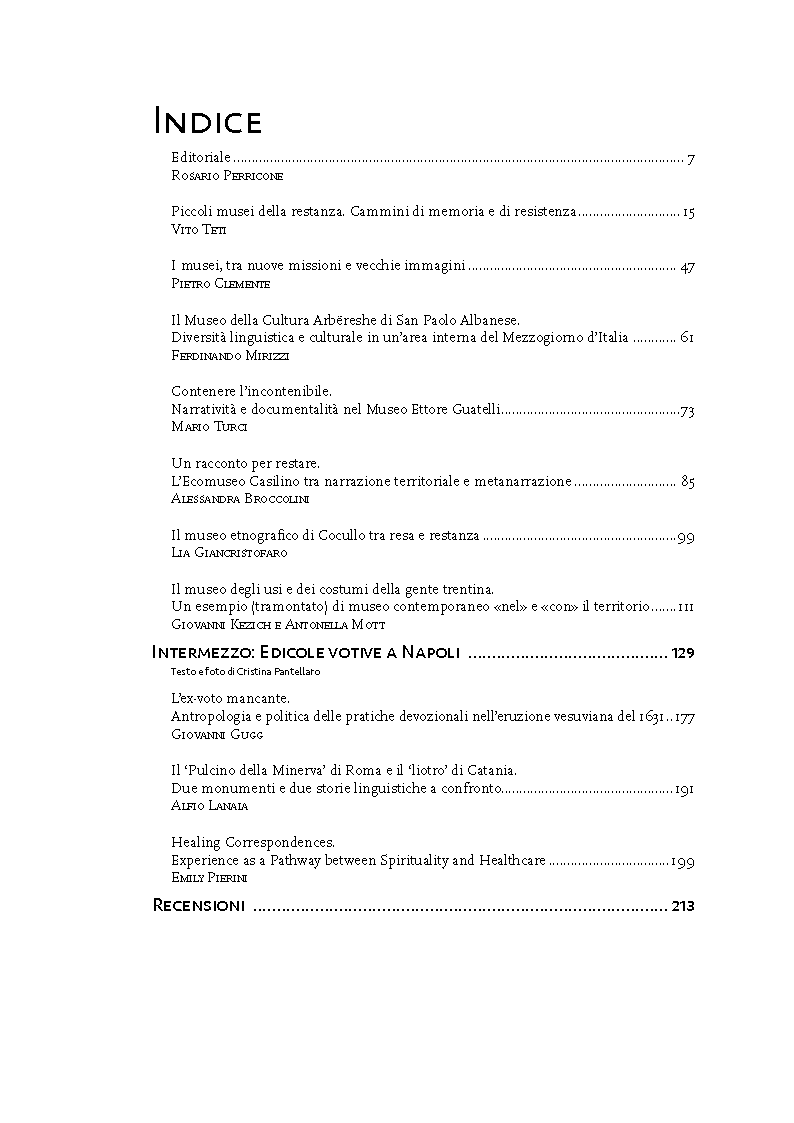
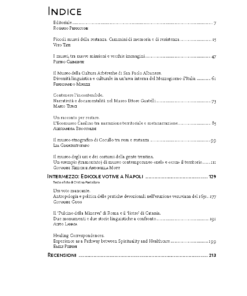
INDICE
Editoriale
Rosario Perricone
Piccoli musei della restanza. Cammini di memoria e di resistenza.
VITO TETI
I musei,tra nuove missioni e vecchie immagini.
PIETRO CLEMENTE
Il Museo della Cultura Arbéreshe di San Paolo Albanese.
Diversità linguistica e culturale in un’area interna del Mezzogiomo d’Italia.
FERDINANDO MIRIZZI
Contenere l’incontenibile.
Narratività e documentalità nel Museo Ettore Guatelli.
MARIO TURCI
Un racconto per restare.
L’Ecomuseo Casilino tra narrazione territoriale e metanarrazione
ALESSANDRA BROCCOLINI
Il museo etnografico di Cocullo tra resa e restanza
LIA GIANCRISTOFARO
Il museo degli usi e dei costumi della gente trentina.
Un esempio (tramontato) di museo contemporaneo «nel» e «con» il territorio.
GIOVANNI KEZICH E ANTONELLA MOTT
INTERMEZZO: EDICOLE VOTIVE A NAPOLI
Testo e foto di Cristina Pantellaro
Lex-voto mancante.
Antropologia e politica delle pratiche devozionali nell’eruzione vesuviana del 1631
GIOVANNI GUGG
Il ‘Pulcino della Minerva’ di Roma e il ‘liotro’ di Catania.
Due monumenti e due storie linguistiche a confronto
ALFIO LANAIA
Healing Correspondences.
Experience as a Pathway between Spirituality and Healthcare
EMILY PIERINI
RECENSIONI
| Edizione | Copia fisica, Copia digitale gratuita |
|---|
Prodotti correlati
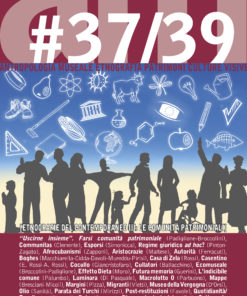
“Uscirne insieme”. Farsi comunità patrimoniale Vincenzo Padiglione e Alessandra Broccolini Communitas Pietro Clemente Esporsi Alessandro Simonicca Regime giuridico ad hoc? Simona Pinton e Lauso Zagato Afrocubanismi Elena Zapponi Aristocrazie Stefano Maltese Autorità Sandra Ferracuti Boghes Ignazio Macchiarella, Giuseppe Cidda, Franco Davoli, Manuelle Mureddu e Giovanni Pirisi Casa di Zela Emanuela Rossi Casentino Emanuela Rossi in dialogo con Andrea Rossi Cocullo Lia Giancristofaro Cullatori Katia Ballacchino Ecomuseale Alessandra Broccolini e [...]
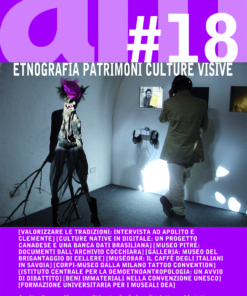
Editoriale Ospite Lettera al Papa Francesco Remotti Intervista Lattanzi/Padiglione e Marisa Dalai Emiliani Miscellanea 1. Musei e mondo postcoloniale: un progetto canadese sulle culture aborigene della Regione dei Grandi Laghi Emanuela Rossi 2. Traduzioni magüta: pensiero ticuna e patrimonio culturale Priscilla Faulhaber 3. Dall’Archivio Cocchiara: nuovi contributi per una storia del Museo Etnografico Siciliano Alessandro [...]

Editoriale ospite Luoghi di memoria, luoghi di oblio Intervista Vito Lattanzi e Gian Luigi Bravo Miscellanea 1.L’arte aborigena e le strategie del National Museum of Australia Giuseppina Prayer 2. Estraneo e Museo Gottfried Korff 3. Una mostra, una regione, una città Ferdinando Mirizzi Galleria 1. Museo del Brigantaggio di Itri (LT) Vincenzo Padiglione Didattica 1.Un museo [...]
Editoriale ospite La cammella di Dio Clara Gallini Miscellanea 1. I Musei della memoria nell’ex Germania dell’Est Liza Candidi T.C. 2. L’autorizzazione. L’arte aborigena australiana e la tutela del copyright Giuseppina Prayer 3. Il suono degli oggetti smarriti Ilaria Vanni Galleria 1. Il Museo Etnografico delle Dolomiti Bellunesi Giovanni Kezich Dalle regioni 1. Lombardia Massimo [...]

Editoriale We are still here Intervista 1. Lattanzi/Padiglione e Anna Maria Bietti Sestieri Miscellanea 1. Il Museo per l’Arte del Tessuto di Tzùffiu Alberto Caoci 2. Etnografia dei musei come nicchie cognitive Francesco Ronzon Galleria 1. Il museo del sale di Cervia Mario Turci Parola chiave 1.Valorizzazione Claudio Rosati Musica/antropologia/popoli indigeni 1. Antonello Ricci [...]
Editoriale I beni dell’”Itala gente da le molte vite” Pietro Clemente Intervista 1. Lattanzi/Padiglione e Marisa Dalai Emiliani Miscellanea 1. Sguardi dal David Claudio Rosati 2. “Siamo divenuti persone”. Dalla ricerca all’esposizione Benoît de L’Estoile 3. L’invisibile che è di casa nei musei Vincenzo Padiglione Galleria 1. L’Ecomuseo del Litorale romano Vito Lattanzi Oggetti e [...]
Editoriale Missione Musei DEA. Invito ad una compilazione ‘esogamica’ Vincenzo Padiglione Intervista Vito Lattanzi e Jean Cuisinier Patrimonio intangibile 1. I beni DEA e il “fare” le tradizioni Paolo Apolito 2. Documento di lavoro Comitato scientifico per la valorizzazione delle tradizioni italiane 3. Il ruolo dei musei Pietro Clemente 4. Dalla parte dei protagonisti Sandro Portelli Galleria 1.Il [...]

Dreamtime – “il tempo del sogno” nella cultura aborigena – indica l’elemento mitico-fantastico comune alle tante creazioni artistiche ed espressive insolite presentate nelle 200 pagine della rivista e raccolte in tutto il mondo: dalla Serbia al Brasile e alla Cina.